Health and Safety Policy for a Professional Removal Company
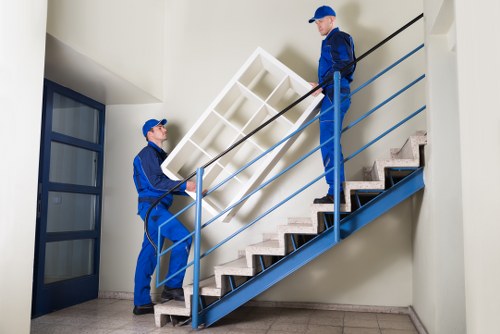 This health and safety policy sets out the standards, responsibilities, and working practices that guide a removal company in delivering safe, reliable, and well-organised services. It applies to all staff, contractors, and managers involved in domestic and commercial moves, including packing, lifting, loading, transport, and unloading. Our approach is based on prevention, planning, and clear communication, with the aim of reducing risk to people, property, and goods at every stage of the process.
We believe that safety is a shared responsibility. Every team member is expected to work carefully, report hazards promptly, and follow agreed procedures. In a busy moving environment, risks can change quickly, so awareness and consistency are essential. This policy supports safe working while helping us maintain efficiency, professionalism, and respect for customers’ belongings.
Our removals company will review safety measures regularly to ensure they remain effective and suitable for the tasks being performed. Where needed, we adapt our methods to the specific conditions of each move, such as access points, weather, stairways, fragile items, or heavy furniture. By taking a structured approach, we reduce the chance of accidents and improve the quality of service.
All operations begin with a risk assessment. Before any move, supervisors identify possible hazards such as blocked access routes, uneven floors, poor lighting, unstable loads, sharp objects, or manual handling challenges. Controls are then put in place to manage those risks. This may include extra staffing, protective materials, specialised equipment, or revised loading plans. Risk assessment is not a one-time exercise; it continues throughout the job as conditions can change.
Training is a core part of our policy. Staff must be instructed in safe lifting techniques, correct use of moving equipment, vehicle loading and unloading, secure packing, and the handling of awkward or high-value items. Refresher training is provided so that standards remain high and knowledge stays current. Managers are responsible for ensuring that only competent personnel carry out tasks that require specific skills or judgement.
 Personal protective equipment, or PPE, must be used where appropriate. Depending on the task, this may include gloves, safety footwear, high-visibility clothing, back support advice, or eye protection. PPE is not a substitute for safe working methods, but it adds an important layer of protection. Equipment must be kept in good condition, and any defects should be reported immediately.
Manual handling is one of the main risks in the removals industry, so it must be managed with care. Items should be assessed before lifting, and mechanical aids should be used whenever practical. Team lifting is preferred for large, heavy, or awkward items. Staff should avoid twisting while carrying, keep loads close to the body, and take rest breaks when necessary. No one should attempt a lift they believe is unsafe.
Customers’ property must also be protected. Furniture, appliances, delicate goods, and fixtures should be handled with attention and proper packing materials. We use blankets, straps, padding, and secure containers to reduce the risk of damage during transport. Vehicles should be loaded in a stable, balanced way, with heavier items secured at the base and lighter items placed safely above them. The goal is to ensure both safety and care throughout the move.
Fire safety is maintained through safe vehicle use, careful storage of materials, and avoidance of clutter in work areas. Smoking, ignition sources, and unsafe electrical items are not permitted in risky environments. Drivers must check that vehicles are roadworthy, loaded correctly, and operated within legal and safety limits. Any incident involving smoke, fire, fuel, or electrical danger must be reported without delay and dealt with according to emergency procedures.
 Good housekeeping is essential on every site. Walkways, stairs, and working areas must be kept free from waste, packaging, tools, and loose materials. Spills should be cleaned promptly to prevent slips and falls. Where access is difficult, teams should plan a safe route in advance and avoid rushing. A tidy workplace supports efficient movement and lowers the risk of injury to staff and others nearby.
Vehicle safety is a major part of our operations. Drivers are expected to carry out daily checks on tyres, mirrors, lights, brakes, fuel levels, and load security. They must follow safe driving practices, respect speed limits, and plan journeys to avoid unnecessary risk. Fatigue is monitored carefully, and drivers should not work when they are too tired to do so safely. Proper rest is important for alertness and good judgement.
We also recognise the importance of health, not just accident prevention. Moving work can be physically demanding, so staff are encouraged to look after their wellbeing, stay hydrated, and speak up if they feel unwell or injured. Exposure to extreme weather, repeated strain, or stressful conditions should be managed sensitively. A safe removals company is one that protects both physical and mental wellbeing.
Emergency preparedness is built into our working practice. Staff must know what to do in the event of injury, fire, vehicle breakdown, property damage, or security concerns. First aid supplies should be available where required, and supervisors must ensure incidents are reported, recorded, and reviewed. Lessons learned from incidents are used to improve future working methods and prevent repeat problems.
Communication is vital before, during, and after each job. Team members should confirm instructions, ask questions when needed, and raise concerns early. Clear coordination reduces confusion and helps tasks proceed safely. Managers must make sure that workload, staffing, and time pressures do not encourage unsafe shortcuts. Safety takes priority over speed.
 We expect all workers to act professionally, courteously, and responsibly. Unsafe behaviour, misuse of equipment, and failure to follow procedures are not acceptable. Supervisors have the authority to stop work if they believe a situation poses unacceptable risk. This policy is supported by regular monitoring, review, and continuous improvement so that our standards remain strong and consistent.
Finally, this policy reflects our commitment to providing a safe and dependable service in every move we undertake. Whether the task involves a small household relocation or a complex business transfer, the same principles apply: plan carefully, work safely, protect property, and support one another. A well-managed removal service depends on discipline, awareness, and respect for good practice.
 By following this policy, our team helps create a working environment where risks are controlled and confidence is maintained. Safety is an ongoing responsibility, and everyone has a part to play in making sure each move is completed with care. Through strong procedures and a culture of responsibility, the removals company can deliver dependable results while protecting people and property.